... field note
The Delicacy Scam
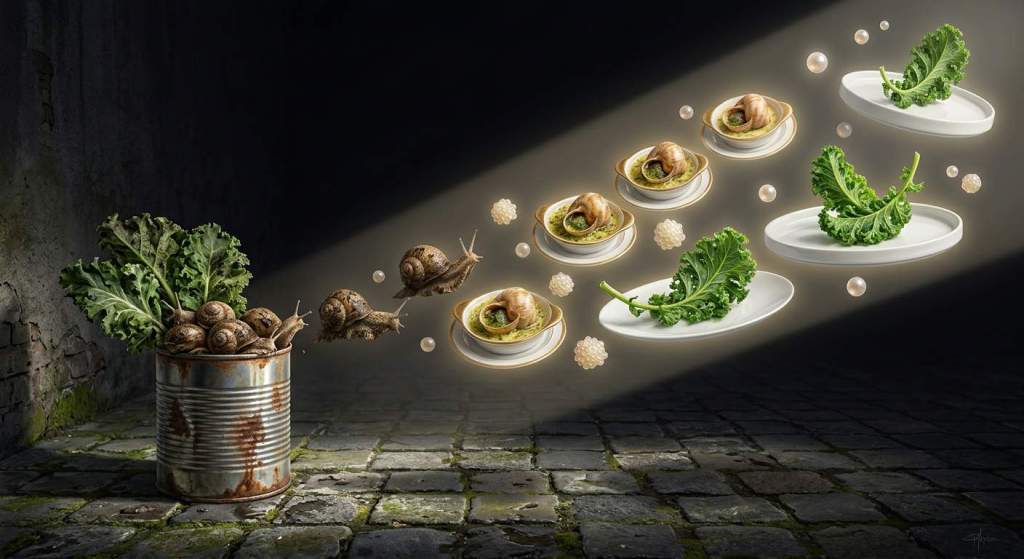
A lot of luxury food seem like profitable pranks that lower classes play on upper classes.
Caviar is fish eggs. Escargot is snails. Foie gras is fatty liver. Sweetbreads sound like dessert, but they are actually organ meat, usually the thymus or pancreas. Oysters are slimy shellfish. Kopi luwak is coffee made from beans that passed through an animal. Lobster, now served as a high-end meal, was once so cheap and plentiful in colonial America that it was associated with servants and poor people.
That is what makes these foods interesting. Many delicacies did not begin as luxury. They began as excess, survival food, or things people ate because they had no better option.
Then someone changed the story.
Fish eggs became caviar. Snails became escargot. Organs became sweetbreads. Moldy cheese became artisanal. Fermented fish became traditional. Tough kale became a superfood. Lobster went from low-status food to the centerpiece of an expensive dinner.
Maybe the secret ingredient was never taste. Maybe it was scarcity, branding, and rich people wanting to feel like they understood something ordinary people did not.
That does not mean these foods are all bad. Some people genuinely love them. But it does show how easily food can be rebranded. Give something a foreign name, a luxury setting, a health claim, or a good origin story, and suddenly the thing nobody wanted becomes the thing everyone is supposed to admire.
A farmer sees a field full of hard cabbage.
A marketer sees kale.
Maybe the real delicacy was never the food itself but the story someone managed to sell with it.